Széll Kálmán Association Member Conducts Research on Artificial Intelligence Acceptance in Malaysia
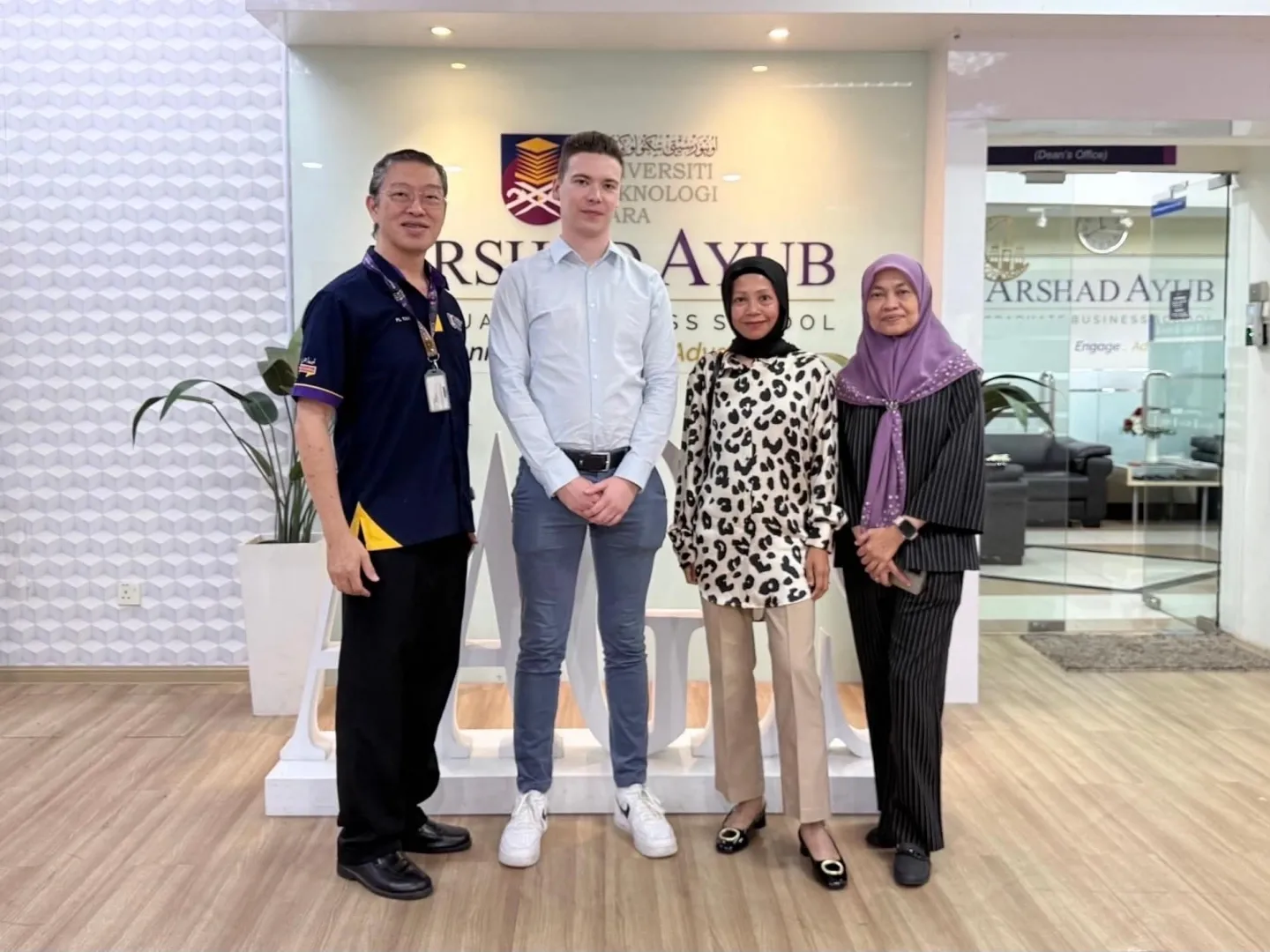
András Aschenbrenner, a doctoral student at Széchenyi István University and a member of the Széll Kálmán International Scientific Student Association, participated in a two-month research mobility programme in Malaysia. As part of an international research project supported by the European Union’s Horizon Europe programme, he continued his research at Universiti Teknologi MARA, investigating the acceptance of artificial intelligence in higher education. Data collected in Hungary and Malaysia also formed the basis of a comparative Hungarian–Malaysian scientific study.
The international research project Overcoming Digital Divide in Europe and Southeast Asia (ODDEA) was implemented under the Marie Skłodowska-Curie Actions Staff Exchanges programme of the European Union’s Horizon Europe research and innovation framework. The project aims to identify differences in digital development between European and Southeast Asian countries and investigate the factors influencing digitalisation. Széchenyi István University participates as a consortium partner, providing opportunities for international researcher mobility and collaborative scientific work.
Between 24 June and 25 August 2026, András Aschenbrenner conducted his research at the Arshad Ayub Graduate Business School (AAGBS) of Universiti Teknologi MARA (UiTM). His mobility built upon research previously conducted in Hungary, which examined attitudes towards artificial intelligence and intentions to use the technology among employees working in administrative and support roles at higher education institutions.
The research was subsequently carried out among UiTM employees in Malaysia using the same research model and questionnaire methodology. The resulting two datasets made it possible to investigate which factors influence the acceptance of artificial intelligence in Hungarian and Malaysian higher education environments.
“Following the research conducted in Hungary, I was interested in exploring what relationships would emerge in another country. We applied the same research model in Malaysia, allowing us to compare findings from two different higher education environments. It is interesting to see which factors play similar roles in the acceptance of artificial intelligence and where differences emerge,” explained András Aschenbrenner.
During the mobility programme, the young researcher had the opportunity to collaborate directly with UiTM colleagues and gain first-hand insight into the Malaysian higher education and research environment. As a result of this collaboration, a scientific paper comparing the findings of the Hungarian and Malaysian studies was completed and is currently being submitted to an academic journal.
“These two months were an extremely valuable experience, particularly because I had the opportunity to work directly with Malaysian colleagues and gain a deeper understanding of their university environment. We also established several professional connections that we can build upon in the future. In addition, I had the opportunity to serve as a jury member in the innovation and invention competition held as part of the 5th AAGBS International Conference on Business Management (AiCoBM 2026), where I evaluated the participants’ developments and ideas.” the young researcher recalled.
The findings of the research conducted in Malaysia also contribute to András Aschenbrenner’s doctoral research, one of the central areas of which is the organisational acceptance of artificial intelligence.
The international mobility programme also serves as an excellent example of the scientific engagement of members of the Széll Kálmán International Scientific Student Association and their active participation in international research collaborations.
